A pasture that was grazed short in the spring can be waist-high in weeds, briars, and saplings by late summer. Let it go a second season and the saplings turn woody, the grass gives up, and the field stops being a field. Bush hogging is how you keep that from happening: a tractor-mounted rotary cutter that knocks tall grass, weeds, and light brush back down to a height you can walk, mow, or graze.
We bush hog pastures, fields, lots, and easements across the Texarkana Four States area. This is lighter work than forestry mulching: it is for ground that is overgrown with grass and light brush, not ground that has gone back to trees. If you are not sure which one you need, keep reading, or send us a few photos and we will tell you straight.
What This Covers
Pastures and Hay Fields
Tall grass, weeds, and briars cut down so the pasture stays open for cattle, horses, or a hay crop next year.
Overgrown Lots and Acreage
Rural lots and unbuilt acreage that have grown up over a season or two, cut back before the brush turns into trees.
Fence Rows and Field Edges
The strip along a fence or tree line where the mower never reaches, cut so you can walk and inspect the fence.
Easements, Lanes, and Pond Banks
Utility easements, access lanes, and the ground around ponds and barns, kept open so you can get equipment through and see what you own.
Bush Hogging or Forestry Mulching?
The difference is what is growing. A bush hog is built for grass, weeds, briars, and saplings you could bend by hand. Once the growth has woody stems thicker than a couple of inches, or there are real trees mixed in, a rotary cutter beats itself up and leaves a mess of stubs behind. That is forestry mulching work: a mulching head grinds the brush and small trees into the ground in one pass. We do both, and we run the same crew for both, so you are not paying for a machine that is wrong for the job.
A good rule of thumb: if you could still mow it with a heavy-duty mower given enough time and patience, it is a bush hogging job. If you would need a chainsaw first, see forestry mulching or full land clearing. If it is mostly a fence line problem, brush removal and fence line clearing is the closer fit.
Why It Pays to Cut Before It Turns Woody
Bush hogging is the cheapest clearing you will ever buy, but only while the growth is still soft. Every season a pasture goes uncut, the saplings put on another ring and the briars root deeper, and the job moves from a few hours with a cutter to a day or more with a mulcher. Landowners who keep a field on a once- or twice-a-year cut spend a fraction of what it costs to reclaim the same ground after it has been let go for three or four years. If it is grazing land you are trying to bring back, our post on reclaiming overgrown pasture walks through that decision.
We bush hog around Ashdown, Foreman, Texarkana, Hope, Nashville, and De Queen on the Arkansas side, New Boston on the Texas side, and Idabel and Broken Bow in Oklahoma. See the full service area for the towns we cover.
Frequently Asked Questions
How tall can the grass and brush be?
Height is rarely the problem; stem thickness is. Tall grass, weeds, and briars are fine at any height. Saplings are fine while they are still thin and green. If you have woody stems thicker than a couple of inches, tell us when you request a quote and we will let you know whether it is a bush hog job or a mulching job.
How often should a pasture be bush hogged?
Most pastures and open lots in this area do well on one cut a year, usually late summer or fall after the weeds have grown but before they seed out. Ground that grows fast or that you want to keep looking clean often gets a second cut. We are happy to set up a recurring visit so it does not get away from you.
Do you need to see the property first?
Usually a few photos and a rough idea of the acreage are enough to give you a straight quote. If the ground is rough, wet, or has hidden hazards like old fence wire, stumps, or a septic field, we will want to walk it first, and we will tell you if that is the case.
What happens to the cut material?
A bush hog chops the growth and leaves it lying where it was cut. On a normal pasture it breaks down within weeks and feeds the grass. If you want the ground cleaner than that, or the growth is heavy enough to leave a mat, ask us about a mulching pass instead.
Do you bush hog small properties?
Yes. We cut everything from a single overgrown lot to open acreage. Tell us roughly how much ground you have and where it is, and we will give you a quote either way.
Send us a photo of the field or lot you need cut through the quote form below and we will tell you what it takes.
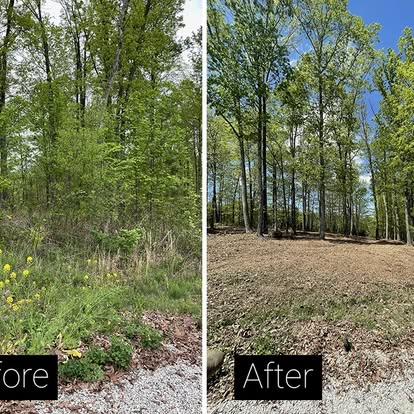
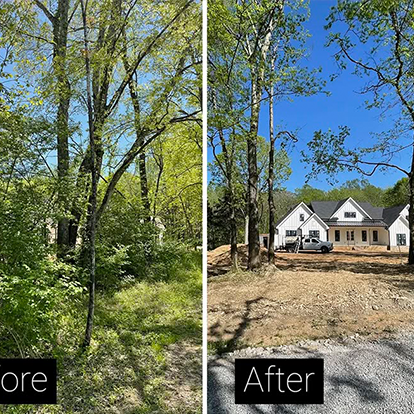
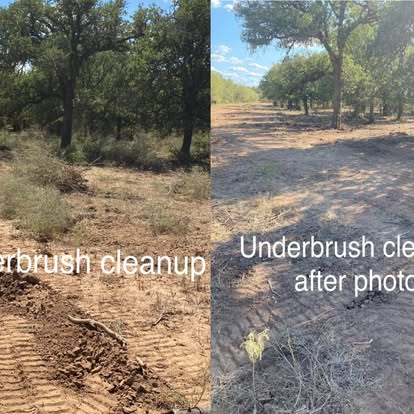
Cleared Property Photos
Get Your Free Quote
Tell us what you are dealing with and we will give you a straight answer on what it takes.
Prefer to talk it through first? Call 870-776-7226.
More Services We Offer
- Land Clearing: clearing overgrown lots and wooded acreage down to usable ground
- Forestry Mulching: one-pass clearing that leaves mulch on the ground, no burn piles
- Brush Removal & Fence Line Clearing: vines, saplings, and underbrush cleared off fence lines and property edges
- Gravel Driveway Building: new driveways built on a properly drained base
- Gravel Driveway Cleanup & Repair: ruts, potholes, washouts and overgrown edges
- Site Prep & Grading: pad-ready lots for builders and contractors
- Texarkana Four States Service Area: the towns we cover across Arkansas, Texas, and Oklahoma